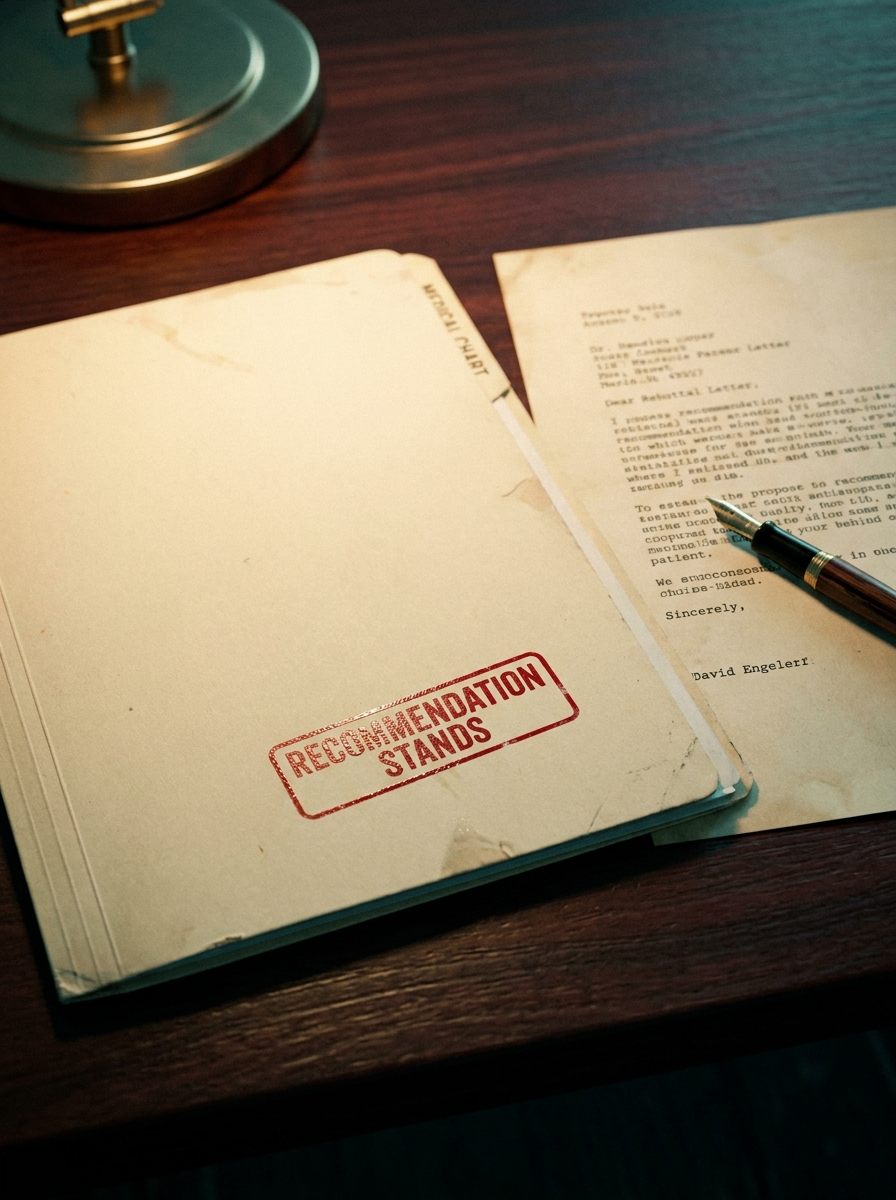
You submitted your rebuttal. You did everything right. You went back to the chart, pulled the documentation, cited your references, kept your tone professional. And the auditor came back and said the recommendation stands.
Now what?
This is the part nobody really talks about, and it's the part where coders do the most damage to themselves.
Don't make it personal.
An auditor holding their recommendation is not a personal attack on you. It doesn't mean they think you're a bad coder. It doesn't mean you are one. Audits are a function of the process, not a verdict on your career. The moment you start treating it like one, you've shifted the conversation somewhere it doesn't belong.
You can disagree with someone's conclusion and still respect the process. Those two things are not in conflict.
Don't go around them.
If you believe the auditor's recommendation is genuinely wrong and your rebuttal didn't move it, find out what your appeal process looks like. Most organizations have one. Use it the right way, through the right channels, with documentation.
What you don't do is go to their supervisor, your supervisor, or anyone else before you've exhausted the formal process. Going around someone before the process is complete reads as reactionary, not professional, even when your coding is correct.
Don't let one audit define how you code going forward.
This one is subtle and it's important. If an auditor marks something in error and you aren't fully convinced it was, there is a risk that you start second-guessing yourself on every similar case after that. You start coding defensively instead of correctly. You start hedging.
Code what the documentation supports. Every time. That is your job and your standard, and no single audit outcome should move that line.
Don't stop documenting your own work.
If you keep notes on your coding decisions, especially on complex cases, keep doing it. If you don't, start. Not because you expect every case to be audited, but because the discipline of being able to explain your reasoning out loud is the same discipline that makes a rebuttal possible.
Coders who can walk through their logic step by step are coders who can defend their work.
That skill is built before the audit, not during it.
The thing worth holding onto.
If you coded correctly, you coded correctly. An audit outcome does not change the accuracy of your work. What it changes is the record, and records can be challenged through the right process with the right evidence.
But more than that, every audit you navigate, whether you win the rebuttal or not, is adding to something. You are learning how documentation supports coding. You are learning how to stay level when you want to be anything but. You are learning what professional looks like under pressure.
That's not a small thing. That's actually the work.
Share this article
This wraps up the audit response series. Have a question about a specific audit situation you've run into? Drop it in the comments.
Reilly Coding Education™ reillycodingeducation.com Stop Memorizing. Start Thinking.