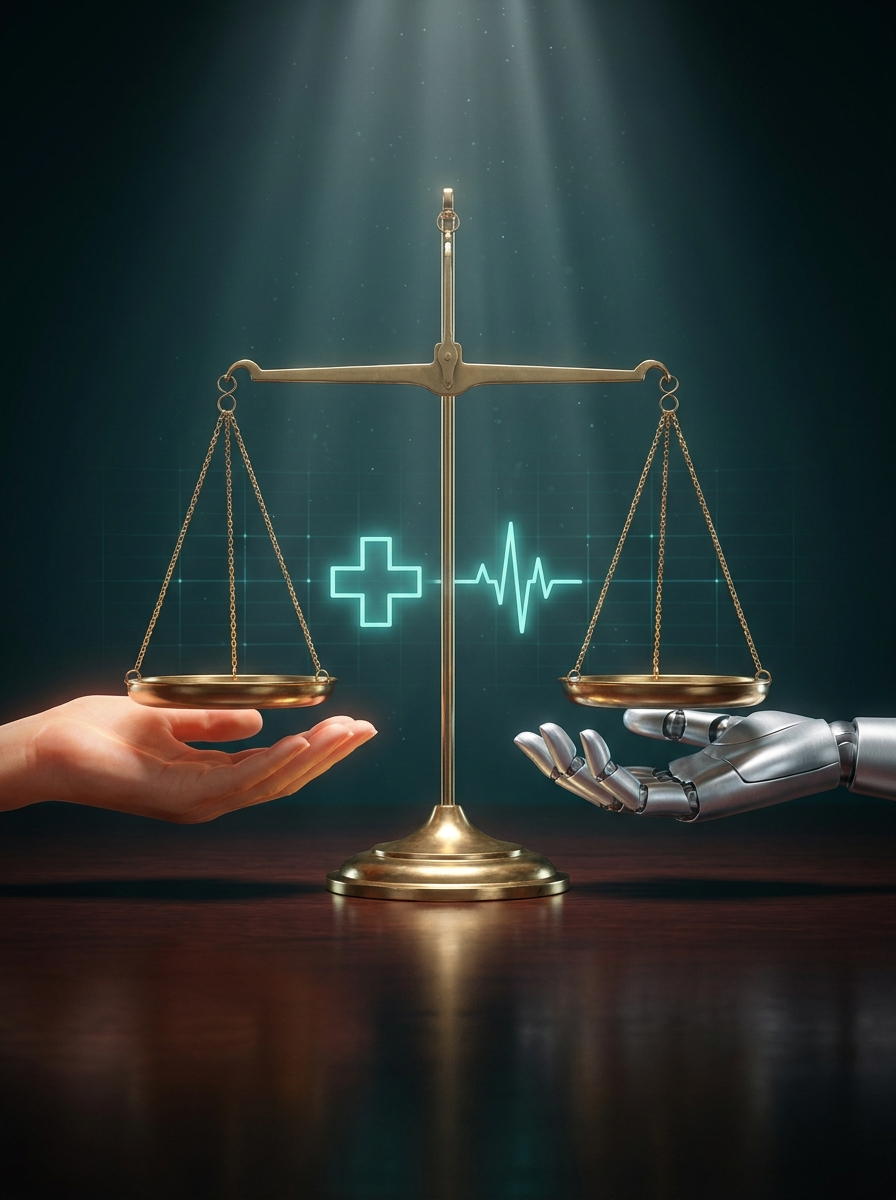
AI in medical coding used to be marketed as a shiny efficiency upgrade. Get more done with fewer coders, automate the repetitive work, and speed up claims. But the environment in 2026 looks very different.
Major payers are no longer impressed by “AI-powered” claims. They are asking a different question: who validated the codes?
Human sign-off on AI-assisted coding is shifting from “nice to have” to a contractual requirement and a core compliance expectation. If your organization cannot show human attestation on AI-coded claims, you are increasingly at risk with payer contracts, audit expectations, and new best practices.
This isn’t a tech trend. It’s a governance shift.
What AI Attestation Really Means
AI attestation is the explicit confirmation that a qualified human—usually a credentialed coder or appropriately licensed clinician—has reviewed, validated, and approved AI-generated codes before claim submission.
It’s not:
- “We use AI, but coders can override it if they want.”
- “The system is 90% accurate, so we trust it.”
- “The vendor told us it was compliant.”
Instead, AI attestation answers three concrete questions:
- Was a human involved in the final coding decision?
- Did that human have the right credentials and authority?
- Can you prove the review happened—down to user, date, and what changed?
Regulators and payers are aligning around the same theme: AI can support coding, but it cannot replace human accountability.
Why Payers Are Demanding Human Sign-Off
Automated systems that up-code or mis-code at scale create outsized financial and legal exposure. A single misconfigured model can impact thousands of claims, and some recent enforcement actions have already targeted organizations relying on overly aggressive automation. Several trends are driving the push for attestation:
- Payer contracts now call it out. Medicare Advantage plans and commercial payers like Humana and Cigna are introducing contract language that requires human coder validation of AI-generated codes to mitigate fraud and upcoding risk.
- Federal guidance emphasizes oversight. OIG compliance guidance and CMS AI-related statements stress human oversight, internal auditing, and due diligence for AI-coded claims, even where there is no explicit “AI rule” yet.
- AI-only workflows underperform. Studies of AI/LLM-based coding engines show accuracy well below what’s acceptable for unsupervised use, with error rates that would be indefensible in an audit if no human review is documented.
From the payer’s perspective, “AI did it” is not a compliance defense. Human attestation restores a clear line of responsibility.
Scenario 1: The “Hands-Off” AI Coding Pipeline
Let’s start with a scenario that looks efficient on paper and very risky in an audit.
The setup
A large multi-hospital system deploys an AI coding engine for same-day surgery and short-stay inpatient cases. The workflow looks like this:
- AI ingests the operative note and H&P.
- The engine assigns ICD-10/CPT codes and groups the DRG/APC.
- Claims are auto-generated and sent once the system flags “high confidence.”
Coders only see these accounts if a denial comes back or a physician disputes something.
What goes wrong
Twelve months later, a Medicare Advantage payer performs a focused DRG review on high-revenue surgical stays. They find a pattern:
- Cases routinely coded with a complication/comorbidity (CC) based on vague documentation.
- DRGs trending higher than peer facilities for similar procedures.
- No clear record of coder involvement before submission.
During the audit, the organization explains that “the AI model is highly accurate” and “coders are available to review exceptions.”
The payer asks for evidence of human sign-off for sampled claims, documentation of who validated the CC codes, and policies describing the oversight process for AI outputs.
The organization only has system logs showing confidence scores—no discrete attestation field and no policy that requires a coder to review “high-confidence” cases.
The result
The payer determines that the organization allowed autonomous AI coding without documented human validation. They initiate recoupment on overpaid claims and impose a corrective action plan requiring mandatory coder review and documented attestation.
Scenario 2: Hybrid Model With Explicit Attestation
Now contrast that with a more mature setup.
The setup
A regional health system uses AI-assisted coding for inpatient medical and surgical cases configured as a dual-pass workflow.
- AI generates provisional codes, DRG, and a rationale.
- A certified inpatient coder reviews the codes and DRG, accepts/edits codes, and electronically attests to the final result.
The attestation is simple but specific: “I have reviewed AI-generated codes for this encounter and attest that the final code set and DRG reflect the clinical documentation and applicable coding guidelines.”
What happens during an audit
When a commercial payer questions claims, the organization can produce a policy describing AI use, system logs showing credentialed coder attestation, and internal audit reports tracking variances. The organization demonstrates human-in-the-loop oversight and clear accountability. The system is perceived as compliant, controlled, and responsive.
What Effective AI Attestation Should Include
To be defensible, AI attestation needs more than a checkbox. You want a repeatable, auditable pattern.
- Defined human role. Specify which credentials (e.g., CIC, CCS, RHIA) are permitted to attest to AI-assisted codes.
- Structured workflow. Use a hybrid model where AI suggests, and humans finalize.
- Electronic attestation. Capture a clear statement, coder ID, and timestamp.
- Change tracking. Log deltas between AI recommendations and final codes.
- Policy + training. Document how AI is used and what coders are expected to validate.
How AI Attestation Changes the Coder’s Role
AI attestation doesn’t erase the need for coders. It repositions them. The work shifts from pure code assignment to validating clinical coherence, recognizing model bias, and acting as a check on coding risk.
The question is not whether you use AI. The question is: can you prove that a qualified human stood behind every claim that went out the door? That’s the new baseline.
Share this article