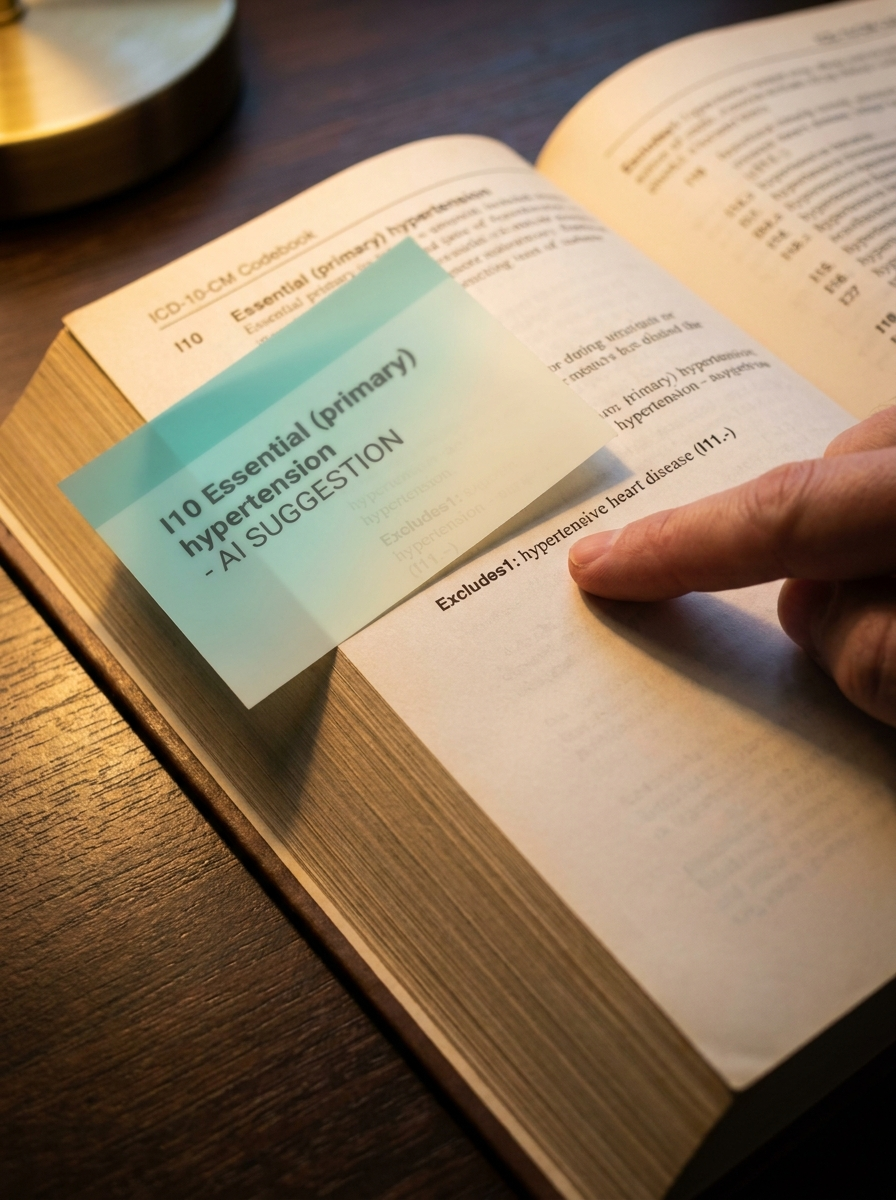
In our first blog about the dangers of relying solely on internet searches and AI while studying for your medical coding coding exam or on the job while coding, we discussed the backstory on how this article became a multi-part blog post.
After being sick for over a week my newsletter was a day late being completed and posted, so I thought, why not use AI to help me write this article for my newsletter? It's usually very good at outlining so why not try having it write the actual article for me?
After careful prompting in AI and having AI ask me very specific questions to ensure accuracy, the results were so bad they're unusable. Or so I thought. The irony of it was just a perfect illustration of why we cannot rely solely on quick internet searches and AI to do the work for us.
The pitfalls, inaccuracies and how they would negatively impact your audit findings, exam scores and accuracy rates was the focus of the article. What follows next is part 2 of what AI gave me for the article content.
My notes are in bold and indented.
Pitfall #2: Missing Nuances in Official Guidelines
Google results rarely highlight instructional notes in your codebook—those little disclaimers that dictate sequencing, combination exclusions, or guideline cross-references.
This much at least is true!
Next is the AI Case Study AI Gave Us:
The Hypertension Combination Code Mix Up
A patient with hypertension admitted for debridement of diabetic ulcer also had chronic kidney disease (CKD). Joan searched "hypertension CKD ICD-10" online and assigned I12.0 (Hypertensive chronic kidney disease without heart failure) and N18.3 (Chronic kidney disease, stage 3). The ICD-10-CM codebook instructional note, however, states that when hypertension leads to CKD, you must apply I12.0x1 (Hypertensive chronic kidney disease with stage 3 CKD) as a combination code—and sequence it before N18.3.
This is not correct.
I12.0x1 does not exist. AI made this up. Again.
I12.0 is a valid code, but it is for Hypertensive Chronic Kidney Disease, stage 5 or end stage kidney disease.
Correct coding would be:
I12.9, Hypertensive chronic kidney disease, stage 1–4
N18.30 Stage 3 CKD, unspecified
Pro Tip: I would recommend you keep your encoder open if you have access, or keep your codebooks handy and check instructional notes, code accuracy and any guidelines for combination codes and sequencing. Instructional notes, guidelines, CMS, and Coding Clinic are considered the official coding references and sources of truth in coding. During audits you must be able to reference at least one of these to defend your coding if rebutting any errors found.
This scenario once again illustrates the dangers in relying solely on the internet and AI for your medical coding. It will lead you astray causing coding errors. Those errors will impact your exam scores and will impact your quality audit scores on the job.
The national standard and expectation from most employers is a minimum of 95% or higher accuracy rate. Which is very doable! IF you take the time to learn coding on your own and practice looking up codes, read the instructional notes and guidelines and practice.
Lots of practice is the very best way to become more confident and accurate with your coding. Shortcuts like AI and Google search are fine for researching a topic, but not for looking up ICD-10 or CPT codes with any certainty.
Next, we'll finish up this series with Part 3 — the third pitfall in using AI and Internet as your sole resource and the garbage output AI gave me on the final coding scenario in this case. We'll also summarize best practices, tools and go-to resources you can use to help you improve your code lookup speed and accuracy.